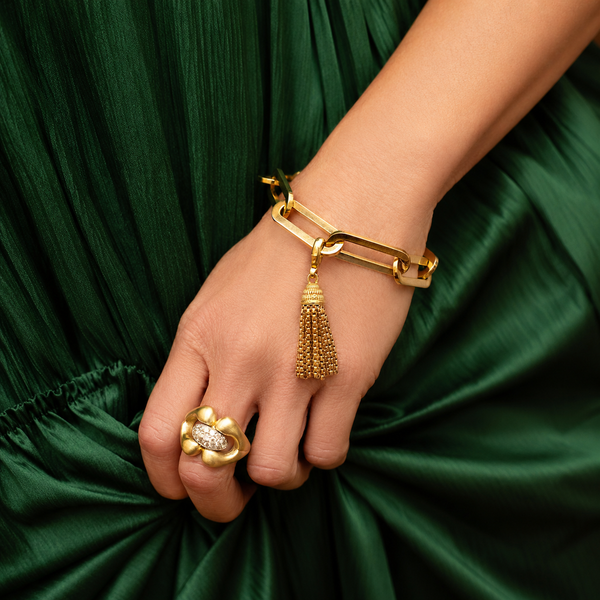
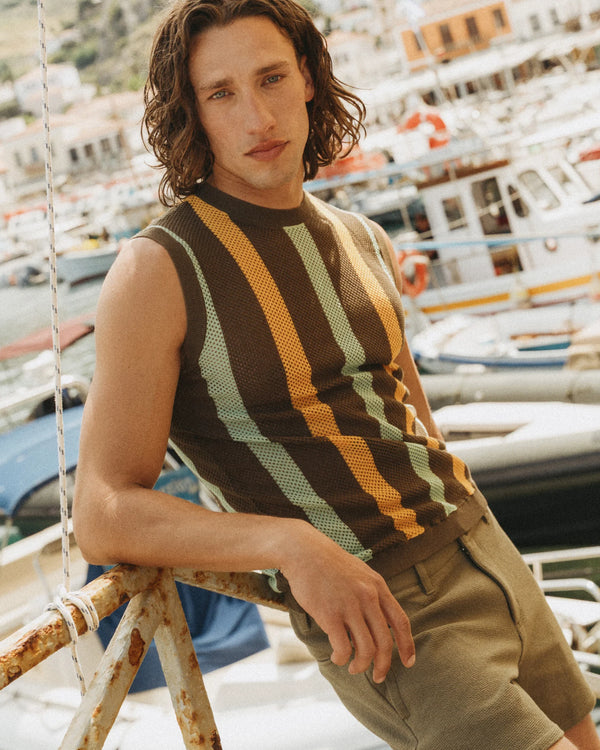
Few independent labels of the last decade are studied as closely as Cult Gaia — and few earned it as methodically. Founded by Jasmin Larian in Los Angeles in 2012, the brand went from flower crowns sold at festivals to one of fashion's most recognizable houses, carried by a single product that became an era-defining object: the bamboo Ark bag. The arc from one viral accessory to a full apparel, swim, shoe, and lifestyle brand is not luck repeated; it is a playbook. Here is how it worked, and what founders can take from it.
Act one: the icon before the brand
Cult Gaia's breakthrough was the Ark — a half-moon bamboo bag, inspired by vintage Japanese picnic bags, that hit around 2016 and became inescapable on Instagram. The strategic insight was not the bag itself but what Larian understood about it: the Ark was wearable sculpture, an object designed to be photographed. In the first years of Instagram fashion, a product that made the wearer's photo better was a marketing engine that paid its owner. The Ark sold out repeatedly, spawned an industry of imitations, and — critically — gave the brand a one-sentence identity before it had a full collection: Cult Gaia makes objects of art you can wear.
Founder lesson: one icon outperforms a full line. A single product distinctive enough to be recognized across a room — and photographed voluntarily — builds more brand equity than a coherent but forgettable collection. Concentrate first; expand from strength.

Act two: surviving the icon
The graveyard of fashion is full of one-product brands. Cult Gaia's defining move was converting the Ark's fame into a design language larger than the bag: sculptural forms, natural materials, architectural hardware, a warm California sensuality. When the brand expanded into apparel, swim, and shoes, every category carried the same DNA — dresses with sculptural cutouts, heels that read as objects. The expansion succeeded because it was recognizably the same idea in new material, not a logo applied to new inventory.
Founder lesson: extract the principle from your hit, not the product. The Ark's principle was sculpture-as-fashion; everything since is that principle restated. Ask what your bestseller is about, and expand along that line only.
Act three: the brand world
Cult Gaia built its aesthetic universe with unusual discipline: a consistent palette of sand, ivory, and earth; campaign imagery closer to art photography than product marketing; a name that itself does mythology work (Gaia, the earth goddess; cult, the devotion). The website — built on Shopify Plus — carries the standard: full-bleed imagery, editorial pacing, restraint everywhere. Retail followed the same logic, with sculptural flagship spaces designed as destinations. The result is a brand recognizable without a logo — the test all luxury positioning ultimately comes down to.
Founder lesson: consistency is the multiplier. Every surface — site, packaging, retail, social — restating one aesthetic idea compounds recognition; variety dissipates it.

Act four: from fashion to lifestyle
The brand's current phase extends the design language beyond fashion — homeware, objects, collaborations, hospitality-adjacent moments — following the path Ralph Lauren defined: when a brand stands for a sensibility rather than a category, adjacent categories become available. Cult Gaia can sell a sculptural object for a table because it never really sold bags; it sold the sensibility the bag expressed. (We map this trajectory in our fashion-to-lifestyle guide.)
The mechanics under the story
Beneath the brand romance sits sound commerce, worth naming because founders often see only the aesthetics:
- Direct-to-consumer economics with wholesale halo. Selective wholesale (the right department stores and boutiques) built credibility while the DTC channel — the Shopify Plus flagship — kept margin and customer data in-house.
- Scarcity discipline. Sellouts were left visible. Restock lists built demand rather than discounts clearing it.
- Price architecture. Accessible entry points (accessories) fund and feed desire for the higher-priced apparel — the classic luxury pyramid, executed at contemporary price points.
- The founder as face. Larian's visibility gave editors a protagonist and customers a person to believe — the asset conglomerate brands cannot manufacture.

What founders get wrong when copying Cult Gaia
The common misreading is to copy the outputs — the palette, the sculptural look, the festival-adjacent styling — rather than the structure: icon first, principle extracted, world built consistently, categories expanded along the principle. A brand that skips to "lifestyle" without an icon has nothing to extend. And the standard underneath everything was taste: the imagery, the site, the product design all executed at a level most young brands don't budget for. The playbook is available to anyone; the standard is the barrier.
Frequently asked questions
What made the Cult Gaia Ark bag so successful?
It was designed — intentionally or not — for the Instagram era: sculptural, instantly recognizable, and photogenic enough that customers marketed it voluntarily. It gave the brand a one-sentence identity before it had a full collection.
Who founded Cult Gaia?
Jasmin Larian, in Los Angeles in 2012. The brand began with festival accessories before the Ark bag's breakthrough around 2016 propelled it into apparel, swim, footwear, and lifestyle.
What platform does Cult Gaia use for ecommerce?
Shopify Plus — part of a wave of luxury and contemporary fashion brands, alongside Khaite and Christian Louboutin, that run their flagships on the platform.
What is the main lesson from Cult Gaia for new brands?
Build one icon, extract its principle, and expand only along that principle — with imagery and web presentation held to editorial standard from day one.
Exhibea builds Shopify flagships and brand identities for fashion houses — including work with Cult Gaia. Start a conversation.