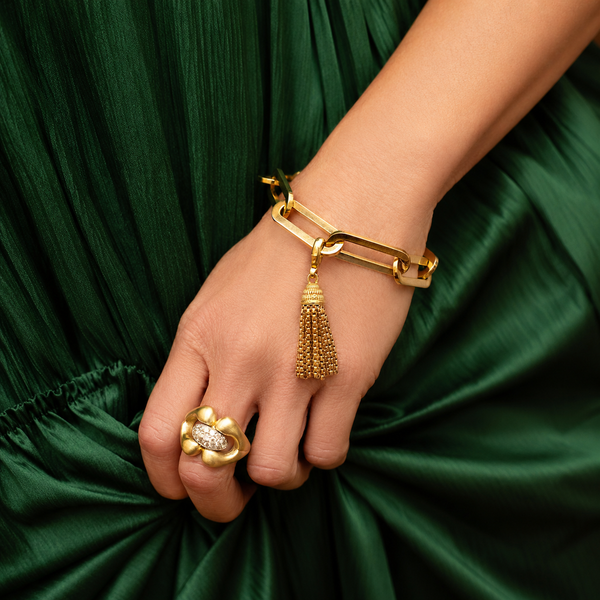
Shopify for jewelry brands has moved from a viable option to the category standard. The strongest independent fine jewelry names in the market — Foundrae, Retrouvaí, Anita Ko, Jade Trau, Marlo Laz, Mejuri — run on it, as do luxury houses like Cult Gaia and Manolo Blahnik on Shopify Plus. The reasons are structural: full design control for a category sold on presentation, the highest-converting checkout in mainstream commerce, a metafield system that finally handles jewelry's complicated product data, and an app ecosystem covering financing, insured shipping, and virtual appointments. This guide covers how to set Shopify up properly for jewelry — because the platform choice is the easy part.
Why Shopify won the jewelry category
- Design control. Jewelry is sold on desire, and desire is built visually. Shopify's theme architecture allows fully custom design — the editorial, image-led presentation the category demands — while remaining manageable by the brand's own team after launch.
- Trust infrastructure. PCI DSS Level 1 payment security, native fraud analysis, and Shop Pay's recognized checkout all matter more when the cart contains a five-figure item.
- An ecosystem built for high-ticket. Affirm and Klarna financing, Route and insured-shipping apps, appointment booking for consultations, Klaviyo for the long consideration cycles jewelry buyers actually have.
- Unified retail. Shopify POS connects the physical counter to the online store — one inventory, one customer record — which matters in a category where most independent brands still sell across both.
Catalog architecture: the part most jewelry stores get wrong
Jewelry product data is the most complex in consumer ecommerce: metal type and karat, stone species and specifications, carat weight, certification, dimensions, ring sizes, and made-to-order variants. Shopify handles this through metafields — structured custom fields attached to every product — and building them correctly at the start determines what the store can do forever after:
- Filtering. Metafields power collection filtering by metal, stone, and price — the way customers actually shop jewelry.
- Product page templates. Specifications render in clean, consistent blocks rather than hand-written paragraphs that drift out of format.
- SEO structured data. Google reads structured product data for rich results — price, availability, ratings in the search listing itself. Jewelry stores with proper structured data visibly outperform those without it.
- AI visibility. As shopping shifts toward AI assistants, cleanly structured product data is what machine systems can read and recommend. Unstructured catalogs are invisible to them.
Brands migrating from legacy jewelry platforms — Thinkspace, JewelFeed-driven sites, Jewel360 — should treat the migration as the moment to build this architecture. We cover that process in our Thinkspace to Shopify migration guide.
Made-to-order and customization flows
A large share of fine jewelry is made to order: metal choices, stone selection, engraving, sizing. On Shopify this is built through variant architecture, line-item properties, and — for complex configurators — apps or custom development. The principles: present options visually (metal swatches, not text dropdowns), state production timelines on the product page and again at checkout, and confirm the specification in the order email. Clear expectations are the difference between a delighted customer and a chargeback on a piece you cannot restock.
The app stack that matters (and the bloat that doesn't)
A focused jewelry stack:
- Klaviyo — email and SMS. Jewelry consideration cycles run weeks; automated browse-abandonment and post-purchase flows do disproportionate work.
- Affirm or Klarna — financing visibly displayed lifts conversion on pieces above roughly $1,000.
- An insured shipping solution — non-negotiable for high-value parcels.
- Judge.me or Okendo — reviews with photos; social proof answers the trust question price creates.
- An appointment booking app — virtual consultations close high-ticket sales pure ecommerce cannot.
Resist everything else. Every app adds scripts, and script weight slows the site — and speed, in luxury, is part of the design. Ten apps is a healthy ceiling for most jewelry stores.
POS: connecting the counter to the site
Independent jewelers with physical stores should run Shopify POS rather than a separate register system. One inventory prevents overselling one-of-a-kind pieces; one customer record means the associate at the counter sees the customer's online browsing and purchase history — the beginning of the clienteling that luxury retail is built on. Case sales, repairs, and custom deposits can all run through the same system that powers the website.
What it costs
Standard Shopify plans run $39–$399 per month; most independent jewelry brands need Shopify or Shopify Advanced, not Plus. A professional custom build runs $20,000–$80,000 depending on catalog and feature complexity; migrations from legacy platforms sit in the same range with catalog work as the main variable. Apps add $100–$400 monthly. Against the alternative — a legacy platform quietly suppressing conversion — the math favors the move quickly for any brand doing real online volume.
Frequently asked questions
Is Shopify good for selling expensive jewelry?
Yes. Shopify is PCI DSS Level 1 certified, includes native fraud analysis, and powers fine jewelry brands selling five-figure pieces — Foundrae, Anita Ko, and Jade Trau among them. Trust is built through design, certification, and policy; the platform provides the secure rails.
Can Shopify handle made-to-order jewelry?
Yes — through variants, line-item properties, and configurator apps for complex customization. Production timelines and specifications should be stated at every step; the platform supports all of it.
Does Shopify work with jewelry industry systems like JewelFeed?
Vendor catalog data can be imported and structured with metafields, and middleware can maintain syncing where needed. Many brands use migration as the moment to curate the catalog and write original descriptions, which outperforms syndicated feed content in search.
Do jewelry brands need Shopify Plus?
Usually not. Plus is for high-volume, high-complexity operations. Most independent jewelers are well served by standard Shopify and can upgrade when growth demands it.
Exhibea is a luxury Shopify agency for fine jewelry brands — catalog architecture, custom design, migrations, and POS. Start a conversation.